

What Are the Pros and Cons of Retiring in Bali? A Detailed Comparison
Visa code update: The Retirement KITAS, formerly index C319, is now E33F (1 year, applicants aged 55 and over, sponsor required) or E33E (5 years, USD 50,000 deposit, no sponsor). See the E33F and E33E pages.
Pros of Retiring in Bali
Affordable Cost of LivingBali offers a lower cost of living than many Western countries, with monthly expenses for a retiree often ranging from $1,000 to $2,000, depending on lifestyle.Housing, food, and transportation are generally more affordable, allowing retirees to stretch their savings and maintain a comfortable lifestyle without financial strain.Beautiful Natural SurroundingsThe island is renowned for its breathtaking beaches, lush rice terraces, and volcanic mountains, offering a postcard-worthy backdrop for daily life.This diverse environment provides retirees with endless opportunities for outdoor activities like swimming, hiking, or simply relaxing by the sea.Rich Cultural ExperienceBali boasts a vibrant culture filled with traditional ceremonies, colourful festivals, and thriving art scenes, from dance performances to intricate crafts.Retirees can immerse themselves in local customs, attend events like the Galungan festival, and enjoy unique experiences that enrich their retirement years.Warm ClimateThe tropical climate ensures year-round warm weather, with average temperatures hovering between 26°C and 30°C (79°F to 86°F), perfect for those who love sunshine.This consistent warmth eliminates the need for heavy clothing and heating costs, making it a practical choice for retirees escaping colder regions.Friendly Local CommunitiesThe Balinese people are known for their hospitality and friendliness. They often greet newcomers with warm smiles and a willingness to help.This welcoming atmosphere can ease the transition for retirees, fostering a sense of belonging in a foreign land.Variety of Lifestyle ChoicesFrom tranquil villages like Ubud to lively beach towns such as Kuta or Seminyak, Bali offers diverse living environments to match different preferences.Retirees can choose a peaceful rural retreat or a bustling coastal hub, tailoring their retirement to their desired pace of life.Access to Fresh ProduceLocal markets, known as “pasar,” provide access to fresh and organic produce like tropical fruits, vegetables, and spices at reasonable prices, often under $1 per kilogram.This abundance supports a healthy diet and allows retirees to enjoy home-cooked meals with minimal expense.Wellness and Leisure ActivitiesBali is famous for its wellness retreats, affordable spas, yoga studios, and recreational options like surfing, hiking, and golfing, catering to relaxation and adventure.Retirees can indulge in a $10 massage or join a yoga class for as little as $5, enhancing their physical and mental well-being.Proximity to Other DestinationsThe island’s location in Southeast Asia allows easy travel to other Indonesian islands like Lombok or Java and nearby countries such as Singapore and Thailand.Affordable flights and ferries make it simple for retirees to explore the region, adding variety to their retirement experience.Cons of Retiring in Bali
Healthcare ChallengesWhile healthcare services are available, retirees may need private health insurance—costing around $50 to $150 monthly—to access top-tier facilities like BIMC or Siloam Hospitals.The public healthcare system may not meet Western standards, and rural areas often lack advanced medical options, requiring travel for serious care.Distance from Home CountriesThe geographical distance from many retirees’ home countries, such as the U.S. or Europe, means long flights (15-20 hours) that can cost $800 or more round-trip.This separation can lead to feelings of isolation from family and friends, especially during emergencies or holidays.Language BarriersAlthough English is widely spoken in tourist areas like Canggu or Ubud, completing daily life outside these zones often requires basic knowledge of Bahasa Indonesia, the local language.Retirees who are personally unfamiliar with it may struggle with tasks like negotiating rents or dealing with local officials, necessitating language lessons or translators.Environmental IssuesOverdevelopment has led to environmental concerns, including traffic congestion in Kuta and plastic pollution on some beaches.These issues can detract from Bali’s natural charm and require retirees to choose less crowded areas to avoid daily frustrations.Limited Public TransportationThe public transportation infrastructure is underdeveloped, with options like BEMO (minivans) being unreliable and infrequent outside major towns.Retirees often need to rely on private options like scooters, which cost $50-$100 monthly to rent, or taxis, potentially adding to expenses and safety concerns.Seasonal Weather ChallengesBali experiences a wet season from November to March, with heavy rains that can cause flooding in low-lying areas like Denpasar or Sanur.This weather can disrupt outdoor plans, damage property, and make roads slippery, posing challenges for retirees unaccustomed to tropical climates.Cultural AdjustmentAdapting to Balinese customs, such as daily offerings or community obligations, may require effort from retirees unfamiliar with the local way of life.Missteps in etiquette—like wearing revealing clothing near temples—can unintentionally offend, so learning cultural norms becomes essential.High Import TaxesImported goods, from electronics to Western foods like cheese, can be significantly more expensive due to import taxes that inflate prices by 20-50%. This tax policy may limit access to familiar products, pushing retirees to adapt to local alternatives or budget extra for comforts from home.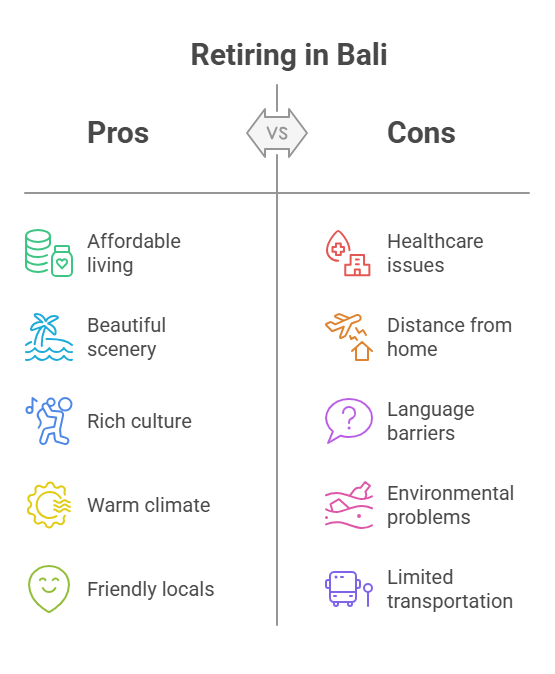
Final Thoughts
Retiring in Bali presents a unique opportunity for those seeking a vibrant lifestyle filled with natural beauty and cultural richness. However, potential retirees should carefully consider the advantages and disadvantages before moving. For those planning this step, securing a retirement visa (KITAS C319) is also key, requiring proof of a pension or savings of at least $18,000 annually.Related Reading
- How to Retire in Bali: Complete Guide 2025
- Retiring in Bali: Cost of Living and Lifestyle Comparison by City
- 15 Best Places to Retire in Indonesia: Complete 2025 Guide

Indonesia Visa Specialist at Bali PAS
Bali-based expert in Indonesian document translation and visa consulting, with over 15 years of experience helping clients with legal paperwork and immigration matters
Latest posts by Hariyono Suwardi (see all)
- Global Citizen Indonesia: Policy, Benefits, Eligibility, Application, and Cost - August 27, 2026
- Indonesia Visa Free Countries List & Entry Rules 2026 - August 18, 2026
- Indonesia Digital Nomad Visa (E33G) Guide 2026 - August 17, 2026
