Digital Immigration Systems in Indonesia 2026: How Online Processing Changed Visa Control
Key facts (July 2026):
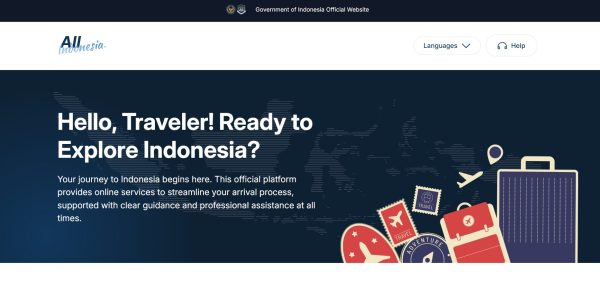
- Apply via evisa.imigrasi.go.id âÃÂàthe old Molina site is legacy.
- Submit the mandatory All Indonesia Arrival Card within 3 days before arrival.
- 306 autogates at airports/seaports process in 15âÃÂÃÂ20 seconds (63âÃÂÃÂ64% of passengers use them).
- No ink stamp âÃÂàcheck your email for the digital stay permit.
- Extensions require in-person biometrics. One data mismatch can stop automated approval.
Precision matters âÃÂàensure all data matches your passport exactly.
Last updated: July 2026
Indonesia’s immigration system ran on paper for decades. Travelers filled out arrival cards on the plane, queued for an officer to flip through their passport, and watched a stamp land on a fresh page. That process took three to five minutes per person âÃÂàand at peak hours, it created lines that snaked through terminal halls.
That analog world is largely gone.
By 2026, the Directorate General of Immigration has replaced most of that manual pipeline with a connected digital stack. You apply through a central portal, upload your documents from home, and at the airport, a biometric camera scans your face against your e-passport chip. No stamp. No paper. The gate opens in under 20 seconds.
This article breaks down every layer of Indonesia’s digital immigration systems âÃÂàwhat they are, how they work, where the traps are, and how to navigate them without a hitch. Each section includes actionable steps. A pre-flight checklist at the end ties everything together.
What “Digital Immigration Systems” Mean in Indonesia
The phrase covers more than an online visa form. Indonesia’s current system is a chain of four connected layers:
- A central application portal âÃÂàevisa.imigrasi.go.id âÃÂàwhere you submit documents and pay fees
- A pre-arrival risk screening engine that checks every applicant against watchlists and overstay records
- Biometric autogates at 306 checkpoints nationwide that scan your face and passport chip
- A digital stay monitoring system that tracks your entry, exit, and compliance without a physical paper trail
Here is how the analog experience compares to the 2026 reality:
Layer Analog (pre-2023) Digital 2026 Application Embassy queue or paper form evisa.imigrasi.go.id âÃÂàfully online Arrival form Paper arrival/departure card on the plane All Indonesia Arrival Card âÃÂàdigital, âÃÂä3 days before Border clearance Officer checks passport + ink stamp Autogate 15âÃÂÃÂ20 seconds, or manual if ineligible Proof of stay Stamp in passport Digital stay permit via email Risk screening At the counter, reactive Pre-arrival algorithm + gate-level biometric match Extension Physical immigration office, full process Online application + mandatory in-person biometrics Each layer feeds into the next. Your application data syncs with the autogate database. Your gate entry logs into the monitoring system. That monitoring system flags overstays automatically. The Indonesian government calls this end-to-end integration. For travelers, it means your visa experience starts the moment you open the portal âÃÂànot when you land.
For more on how this connects to the broader digital architecture, see our guide on the Foreign National Monitoring System in Indonesia.
From Molina to evisa.imigrasi.go.id
What Molina Was
Molina âÃÂàshort for Permohonan Visa Online dan Izin Tinggal Elektronik (Online Visa and Electronic Stay Permit Application) âÃÂàwas the Indonesian immigration directorate’s first-generation digital visa portal. It launched years ago as a replacement for embassy-only applications and served as the single entry point for electronic visas and VoA applications.
What Molina Is in 2026
Molina is legacy. It is closed.
The official and only current portal is https://evisa.imigrasi.go.id. If a search result or agent sends you to molina.imigrasi.go.id, that link will not process your application. The system migrated entirely.
Why People Still Search “Molina”
The name stuck. Even after the migration, travelers and even some third-party services still refer to the system as “Molina.” This causes real problems: applicants land on obsolete URLs, enter their details on pages that no longer connect to the active database, and lose time.
Molina is not a competing product. It is not a private service. It is the old name for the official portal. Use evisa.imigrasi.go.id.
âÃÂàïøàImportant: Some third-party sites mimic the Molina interface. These are not the official system. Only evisa.imigrasi.go.id processes actual visa applications for the Indonesian government.
We have a full breakdown of the differences: Molina vs eVisa Indonesia: Official Web Differences Explained.
The Core Digital Pipeline âÃÂàApply to Approval
Applying for an Indonesian e-Visa or e-VOA through the digital system follows six steps. Miss one, and the pipeline rejects your application before an officer ever sees it.
Step 1: Create an Account
Visit evisa.imigrasi.go.id and register with a valid email address. You will receive a verification link. The account stays active for future applications.
Step 2: Select Your Visa Type
Choose the category that matches your trip. Common options for 2026 include:
- e-VOA (Visa on Arrival) âÃÂà30 days, extendable once, for tourism and short business
- Single-Entry Visitor Visa (C1) âÃÂà60 days, extendable, for longer stays
- Multiple-Entry Visitor Visa âÃÂàvalid up to 12 months, max 60 days per visit
- Second Home Visa âÃÂà5 or 10 years for qualifying applicants
Picking the wrong category is one of the most common reasons for rejection at step 5.
Step 3: Upload Documents
The portal asks for:
- High-resolution passport scan (all pages with data, at least 300 DPI)
- Recent color photograph (white background, 4ÃÂÃÂ6 cm, no glasses)
- Bank statement showing sufficient funds âÃÂàfor visitor categories, expect a USD 2,000 minimum balance (always verify the exact amount on the portal; thresholds change)
- Return flight itinerary
- Hotel booking or letter of invitation
Critical: The passport scan must match the machine-readable zone (MRZ) exactly. A blurry image, a cropped corner, or a low-resolution file triggers an automated rejection.
Step 4: Payment
The portal accepts Visa, Mastercard, and some local bank transfers. Transactions time out after 30 minutes of inactivity. If payment fails, the application does not go through âÃÂàyou must start over.
Keep a backup card ready. Payment failures from non-Visa/Mastercard cards are a known friction point.
Step 5: Processing and PDF Issuance
The system runs your details through automated security checks. If nothing flags, the eVisa arrives as a PDF in your registered email. Processing time varies: e-VOA applications often clear within 1âÃÂÃÂ2 business days. Visitor visas can take 4âÃÂÃÂ7 business days.
Step 6: Print and Backup
Print at least two copies. Keep a digital copy on your phone. Immigration officers at manual counters may ask for a printed eVisa, while the autogate scans the barcode directly from the PDF.
Common Rejection Reasons
Issue Why It Happens Fix Blurry passport scan Low resolution or poor lighting Scan at 300+ DPI, flat surface, no shadows Name/DOB mismatch Typo in portal differs from passport Double-check MRZ before submitting Card payment fails Card not international-enabled Use Visa/Mastercard, inform bank beforehand Insufficient funds Below the portal’s minimum balance Top up account, screenshot balance Watchlist flag Name matches or is similar to a flagged individual Contact nearest Indonesian embassy for clarification We cover these scenarios in detail: Common Indonesia Visa Error Messages Explained and Stuck in Waiting Verification? How to Fix It.
Biometric Autogates âÃÂàHow Border Control Changed
This is the most visible change for anyone arriving in Indonesia. The autogate system âÃÂàdeployed at 306 locations nationwide âÃÂàreplaces the manual immigration officer for eligible travelers.
Scale and Coverage
Metric Figure Total autogates nationwide 306 Airport autogates 288 Seaport autogates 18 Entry points covered 11 (gates deployed across 11 entry points âÃÂànot âÃÂÃÂ+11 extraâÃÂÃÂ) Average clearance time 15âÃÂÃÂ20 seconds Usage rate at major checkpoints ~63âÃÂÃÂ64% Manual legacy clearance time 3âÃÂÃÂ5 minutes Source: ANTARA (June 20, 2026) âÃÂàDirjen Imigrasi Hendarsam Marantoko. Of the 306 autogates in operation, 288 are at airport checkpoints and 18 at seaport facilities across 11 entry points.
The 63âÃÂÃÂ64% adoption rate at major checkpoints like Soekarno-Hatta (CGK) and Ngurah Rai (DPS) shows that most travelers now go through the gates. That number is growing. Immigration plans further autogate installs through 2026 as traffic rises.
Who Can Use the Autogate?
Traveler Type Autogate Eligible? Notes Indonesian citizens with e-passport âÃÂàYes Standard entry Foreign nationals with eVisa / e-VOA + e-passport âÃÂàYes (age 14+ typical) Face scan matches eVisa data ITAS / ITAP (electronic stay permit) holders with e-passport âÃÂàUsually yes System-registered stay; follow airport signage ASEAN nationals (visa-exempt) âÃÂàïøàYes, with pre-registration Must register on eVisa portal before travel Airport VOA pay on arrival only âÃÂàNo Manual counter only Non-biometric passport holders âÃÂàNo Manual counter Children under 14 âÃÂàNo Manual counter with parent At the Gate
The process takes three steps:
1. Scan your passport. Place your e-passport on the glass reader, photo page down. The reader extracts the data from the embedded chip.
2. Look at the camera. The system compares your live face to the passport chip photo and the eVisa database entry. Keep your face centered, remove sunglasses, and make sure nothing covers your features.
3. The gate opens. Successful match âÃÂàthe barriers slide open. You are through.
The entire sequence finishes in 15 to 20 seconds.
No Stamp. What Then?
The autogate logs your entry directly into the central immigration database. Officers no longer place an ink stamp in your passport. Instead, a digital stay permit notification is sent to the email address you used for the eVisa application.
Keep checking that email inbox. If the notification does not arrive within 24 hours, contact your nearest immigration office. Some travelers assume the absence of a stamp means something failed. It does not âÃÂàit means the system worked exactly as designed.
If the Gate Fails
It happens. A smudged fingerprint scanner. A passport chip that does not scan. A face angle that confuses the camera. In that case:
- Try a different autogate unit.
- If that fails, proceed to the manual counter.
- The officer will process you using traditional verification.
No penalty for gate failure âÃÂàit simply routes you to the human fallback.
For the full arrival walkthrough: Navigating the Modern Gateway: Indonesian Border Control Procedures.
All Indonesia Arrival Card
This is not a visa. It is a mandatory digital declaration that every traveler must submit before arriving in Indonesia.
What it is: The All Indonesia Arrival Card (accessible at allindonesia.imigrasi.go.id or via the mobile app) replaces the old paper arrival/departure card that flight attendants used to hand out mid-flight.
When to submit: No earlier than 3 days before your scheduled arrival. Submitting earlier than that may result in the system rejecting or expiring your card before you land.
What it replaces: The paper arrival card, the departure card, and the manual data entry that officers used to do at the counter. All of that is now digital.
What you fill in:
– Full name (exactly as on passport)
– Passport number and expiry date
– Flight number and arrival date
– Accommodation address in Indonesia
– Purpose of visit
– Health declaration (standard, no COVID-specific restrictions as of July 2026)Critical: Match every field to your passport MRZ. A single character mismatch between your Arrival Card name and your eVisa name flags the system.
The portal is clear: allindonesia.imigrasi.go.id. Do not confuse this with the eVisa portal âÃÂàthey are separate systems.
Risk Screening and Enforcement
Digital immigration is not just convenience. It is enforcement.
The moment you submit your eVisa application, automated protocols check your details against:
- The national watchlist âÃÂàindividuals flagged by immigration, police, or intelligence agencies
- The overstay registry âÃÂàpast history of staying beyond permitted duration
- The Daftar Penangkalan (entry ban list) âÃÂànames barred from entering Indonesia for immigration violations
If the system flags a mismatch âÃÂàeven a partial name match âÃÂàit routes your application to manual review. That review takes longer. In some cases, it results in denial.
At the gate, the autogate also runs a live risk check. Facial recognition and document authentication are tied to national watchlists and international alerts. According to a 23 April 2026 press release from the Directorate General of Immigration, officers at Ngurah Rai used the autogate system âÃÂàintegrated with Interpol 24/7 âÃÂàto intercept a U.S. national wanted in a homicide case upon arrival from Taipei. That case is a concrete example: automated border lanes are not only about speed; they are part of IndonesiaâÃÂÃÂs selective-policy enforcement stack.
If your biometric scan triggers an alert, the gate does not open. You are directed to a secondary inspection desk.
And after entry? The digital stay monitoring system keeps a log. Overstay past your permitted duration is flagged at departure. Daily overstay fines apply under Indonesian immigration regulations (amounts and procedures are set by the applicable rules at the time of exit âÃÂàalways confirm with the immigration office or a licensed consultant before you plan close to your expiry date).
Most travelers never encounter secondary screening. Understanding that the systems are connected still explains why a clean, accurate application matters.
Read more: Foreign National Monitoring System in Indonesia Explained.
In-Country Mobility âÃÂàBridging and Hybrid Extensions
The digital system does not end at the border. Once inside Indonesia, several online tools let you manage your stay âÃÂàbut not everything is remote.
Bridging Visas
Indonesia’s bridging visa (Visa Jembatan) system lets eligible travelers transition between visa categories without leaving the country. Example: you enter on an e-Visa on Arrival (e-VOA), then decide to apply for a long-term work visa. The bridging visa covers the gap between your current permit’s expiry and the new permit’s activation.
This is genuinely digital âÃÂàyou can initiate the process through the eVisa portal and, in some cases, receive the bridging approval without visiting an immigration office. The official portal also surfaces Bridging Stay Permit as an available pathway alongside other electronic services.
Digital long-stay note: Global Citizen of Indonesia (GCI)
Since 26 January 2026, Immigration has offered Global Citizen of Indonesia (GCI) pathways for eligible foreigners with strong ties to Indonesia (for example former Indonesian citizens, certain descendants, spouses of Indonesian citizens, and other categories defined in the policy). Applications run through evisa.imigrasi.go.id. Official explainers state that GCI e-visas integrate with autogates and manual counters; travelers who want to use the autogate must still complete the All Indonesia Arrival Declaration before arrival. In the published GCI service description, holders may receive an indefinite permanent stay permit (ITAP) within about 24 hours after entry without a separate immigration-office visit for that step âÃÂàalways verify current indexes and eligibility on the official portal. GCI is a specialized long-stay track; most tourists still use e-VOA or visit visas.
Hybrid Extensions: The 2025+ Reality
Starting mid-2025, Indonesia shifted many extension processes to a hybrid model. You apply online, but you must appear in person for biometric capture at an immigration office. This applies to:
- e-VOA extensions (beyond 60 days)
- ITAS (Limited Stay Permit) extensions
- Certain work visa renewals
Why the hybrid model? The government wants biometric records as a counter-terrorism and identity verification measure. A fully remote extension does not capture the physical biometric data they need for the database.
For digital nomads, families, and corporate KITAS holders, this means budgeting time for an in-person visit. The online portion saves the paperwork queue. The biometric portion takes 15 minutes at an immigration office.
Contact us for guidance: Visa Service or Work Visa.
Related reading: Indonesia’s Biometric Visa Requirements âÃÂàComplete Guide.
Before vs. After: Side-by-Side
Aspect Before Digital (pre-2023) After Digital (2026) How you apply Visit embassy or agent, paper form evisa.imigrasi.go.id from anywhere Arrival form Paper card on the plane All Indonesia Arrival Card, digital, 3 days before Queue at airport 30âÃÂÃÂ90 minutes peak, officer per person 15âÃÂÃÂ20 seconds autogate, or 3âÃÂÃÂ5 min manual Proof of stay Passport stamp Digital stay permit via email Cost of a data error Corrected at the counter with pen Application rejected, must reapply Extension process Physical office, photocopies, multiple visits Online submission + one in-person biometric visit Pre-Flight Digital Compliance Checklist
Before your flight to Indonesia, run through these ten checkboxes:
- [ ] Passport type confirmed âÃÂàis it an e-passport with the biometric chip symbol on the cover?
- [ ] eVisa approved âÃÂàcheck your email for the PDF. Did it arrive?
- [ ] eVisa PDF printed âÃÂàat least two copies. One in carry-on, one in checked bag.
- [ ] Digital eVisa copy on phone âÃÂàin case the officer asks for a digital scan.
- [ ] All Indonesia Arrival Card submitted âÃÂàcompleted at allindonesia.imigrasi.go.id, âÃÂä3 days before arrival.
- [ ] Name and DOB match âÃÂàevery character on your eVisa and Arrival Card matches your passport MRZ. No exceptions.
- [ ] Bank statement ready âÃÂàshowing the portal’s minimum balance. Screenshot or PDF, date within 30 days.
- [ ] Payment card working âÃÂàinternational transactions enabled, Visa/Mastercard preferred.
- [ ] Email inbox monitored âÃÂàthe digital stay permit arrives there post-arrival.
- [ ] Extension plan clear âÃÂàdo you plan to stay longer? If yes, budget for an in-person biometric appointment.
Mid-flight check: If you are planning an extension, start the online application early. Biometric slots at immigration offices fill up, especially before holiday periods.
Need a document review before you submit? We can help. Visit our Visa Service page or reach out via our contact form.
Real Scenario: One Blurry Scan
A client came to us last month. He had applied for an e-VOA through evisa.imigrasi.go.id. The payment went through. The PDF arrived. Everything looked fine.
At Ngurah Rai airport, the autogate scanner rejected his passport three times. He moved to the manual counter. The officer compared his passport to the eVisa PDF and spotted the problem: his passport scan in the application had a blurred corner near the MRZ. The system accepted it during processing but the gate-level biometric comparison failed because the reference image was low-quality.
He spent 45 minutes in manual clearance. The officer eventually let him through after cross-referencing his data manually.
The fix was simple âÃÂàscan the passport on a flat surface, no shadows, 300+ DPI, and verify the image opens clearly before submitting. That 5-minute check would have saved him 45 minutes in the airport queue.
FAQ
Q1: What is Indonesia’s digital immigration system in 2026?
It is the centralized online platform âÃÂàevisa.imigrasi.go.id âÃÂàcombined with 306 biometric autogates, the All Indonesia Arrival Card system, and a connected monitoring database that handles visa applications, border clearance, and stay compliance digitally.
Q2: Is Molina still the official visa portal?
No. The old Molina portal (molina.imigrasi.go.id) is closed. The official website is https://evisa.imigrasi.go.id. Molina is sometimes used as a nickname for the system, but it no longer processes applications.
Q3: How many autogates does Indonesia have?
306 as of June 2026 reporting: 288 at airports and 18 at seaports, deployed across 11 entry points. The Directorate General of Immigration continues to expand coverage through 2026.
Q4: How long does the autogate clearance take?
Between 15 and 20 seconds for eligible travelers. Manual clearance at the legacy counter takes 3 to 5 minutes.
Q5: Will I get a stamp in my passport?
Usually not. The autogate does not place an ink stamp. Instead, a digital stay permit notification is sent to your registered email address. Check your inbox within 24 hours of arrival.
Q6: Is the All Indonesia Arrival Card a visa?
No. It is a mandatory health and customs declaration that every traveler must submit within 3 days before arrival. It is separate from the eVisa application process.
Q7: Can all travelers use the autogate?
No. Typical eligibility requires an e-passport with a biometric chip plus an approved eVisa/e-VOA (or a system-registered electronic stay such as ITAS/ITAP where supported), and for most foreign nationals the posted age rule is often 14 or older. Airport VOA pay-on-arrival-only travelers and non-biometric passport holders generally use the manual counter. Always follow live airport signage.
Q8: Can I extend my visa fully online?
Not always. Many extensions âÃÂàincluding e-VOA renewals and ITAS applications âÃÂànow require an in-person biometric capture at an immigration office, even if you start the process online. Check your visa type for the specific requirements.
Conclusion
Three non-negotiables for anyone entering Indonesia through the digital system in 2026:
- Use the correct portal. evisa.imigrasi.go.id for visas. allindonesia.imigrasi.go.id for the Arrival Card. Not Molina. Not a third-party clone.
- Submit your All Indonesia Arrival Card. Within 3 days. No exceptions at the gate.
- Check your autogate eligibility. E-passport. eVisa. 15 seconds. No stamp. Know it before you fly.
The system is faster, cleaner, and more accurate than the analog alternative. But speed comes with a trade-off: digital gates have zero tolerance for data errors. One blurred scan, one mismatched name, and you are rerouted to the manual queue.
Precision matters. If you are unsure about any part of your application, we offer document QC and pathway guidance âÃÂàfrom e-VOA to extended work visas. We are a private consultancy, not a government agency, but we know the system inside out.
Get your documents pre-checked âÃÂàVisa Service
Ask a specific question âÃÂàContact Us
Disclaimer: indonesiavisas.id is a private visa consultancy agency. We are not affiliated with the Indonesian Government or the Directorate General of Immigration. The information on this page is for guidance only and does not constitute legal advice.
Sources
- ANTARA News (June 20, 2026) âÃÂà“Indonesia expands automated immigration gates nationwide” âÃÂàhttps://en.antaranews.com/amp/news/419805/indonesia-expands-automated-immigration-gates-nationwide
- evisa.imigrasi.go.id âÃÂàOfficial Indonesian eVisa Portal
- allindonesia.imigrasi.go.id âÃÂàOfficial All Indonesia Arrival Card Portal
- Directorate General of Immigration Republic of Indonesia âÃÂàhttps://www.imigrasi.go.id
- Ditjen Imigrasi press (23 Apr 2026) âÃÂàAutogate + Interpol interception at Ngurah Rai âÃÂàhttps://www.imigrasi.go.id/siaran_pers/autogate-imigrasi-menggagalkan-wn-us-pelaku-pembunuhan-yang-akan-masuk-ke-indonesia
- Kantor Imigrasi Jakarta Selatan (26 Jan 2026) âÃÂàGlobal Citizen of Indonesia (GCI) inauguration / digital pathway notes âÃÂàhttps://jakartaselatan.imigrasi.go.id/en/berita/imigrasi-resmikan-global-citizen-of-indonesia-di-hari-bakti-imigrasi-ke-76
- Global Citizen Indonesia: Policy, Benefits, Eligibility, Application, and Cost - August 27, 2026
- Indonesia Visa Free Countries List & Entry Rules 2026 - August 18, 2026
- Indonesia Digital Nomad Visa (E33G) Guide 2026 - August 17, 2026